
New at Paragon: StemWaveLearn more
Person holding their lower back

Minimally invasive procedures

Small-incision options for spine, joint and tendon pain that can help you avoid major surgery and get back to life sooner.

Every specialty, one roofOne shared plan for your careWe verify your insurance before your first visit

Every procedure we offer

Tap a treatment to jump to it. Every option starts with a consult, where Dr. Skoblar reviews your history, exam and imaging to make sure it’s right for you, and your care is coordinated with your therapy team.

MILD Procedure

Minimally invasive lumbar decompression for spinal stenosis.

What is the MILD procedure?

In lumbar spinal stenosis, thickened ligament tissue narrows the spinal canal and compresses nerves, causing leg pain and heaviness when standing or walking.

The MILD procedure removes a small amount of that excess ligament through a tiny incision, with no implants and no stitches, restoring space for the nerves.

How it can help

  • Relieves leg pain and heaviness
  • Improves walking and standing tolerance
  • No implants or stitches
  • Outpatient, with a quick recovery

MILD Procedure may help with

  • Lumbar spinal stenosis
  • Leg pain or heaviness when walking

What to expect

  1. 1
    Procedure

    Through a small port, excess ligament tissue is removed under image guidance.

  2. 2
    Recover

    Most patients go home the same day and return to light activity quickly.

Endoscopic Discectomy

Removes herniated disc material pressing on a nerve, through a tiny incision.

What is an endoscopic discectomy?

When a herniated disc compresses a nerve and conservative care hasn’t helped, removing the herniated fragment can relieve pain.

Endoscopic discectomy uses a small camera and instruments inserted through an incision less than an inch long, preserving surrounding muscle for a faster recovery than traditional surgery.

How it can help

  • Relieves nerve compression
  • Tiny incision and less tissue damage
  • Faster recovery than open surgery
  • Outpatient procedure

Endoscopic Discectomy may help with

  • Herniated discs
  • Sciatica
  • Radiating arm pain from a neck disc

What to expect

  1. 1
    Procedure

    The herniated fragment is removed through a small endoscope.

  2. 2
    Recover

    Most people walk the same day, and rehab rebuilds strength.

Kyphoplasty

Stabilizes painful vertebral compression fractures.

What is kyphoplasty?

Vertebral compression fractures, often caused by osteoporosis, can bring sudden, severe back pain and a loss of height.

Kyphoplasty inserts a small balloon into the fractured vertebra to restore space, then fills it with bone cement to stabilize the bone. Many patients feel significant relief within days.

How it can help

  • Rapid fracture pain relief
  • Stabilizes the vertebra
  • Can restore vertebral height
  • Improves mobility

Kyphoplasty may help with

  • Osteoporotic compression fractures
  • Traumatic compression fractures

What to expect

  1. 1
    Procedure

    Under image guidance, a balloon creates space and bone cement stabilizes the fracture.

  2. 2
    Recover

    Many patients walk within hours, followed by strength and bone-health guidance.

Intracept (Basivertebral Nerve Ablation)

Treats chronic low back pain that comes from inside the vertebrae.

What is Intracept?

Some chronic low back pain comes not from discs or joints, but from the vertebral endplates. This is known as vertebrogenic pain, and the basivertebral nerve carries its signals.

Intracept uses radiofrequency energy to ablate this nerve through a small access point, offering long-lasting relief for qualified patients identified on MRI.

How it can help

  • Targets vertebrogenic back pain
  • Long-lasting relief
  • Minimally invasive
  • No implant left behind

Intracept (Basivertebral Nerve Ablation) may help with

  • Chronic vertebrogenic low back pain
  • Endplate (Modic) changes on MRI

What to expect

  1. 1
    Qualify

    An MRI review confirms endplate changes that indicate vertebrogenic pain.

  2. 2
    Procedure

    The basivertebral nerve is ablated through a small access point.

  3. 3
    Recover

    Most people return to normal activity quickly as relief develops.

Sacroiliac Joint Fusion

Minimally invasive stabilization of a painful, unstable SI joint.

What is SI joint fusion?

When SI joint pain persists despite therapy and injections, the joint may be unstable. Minimally invasive SI joint fusion places small implants across the joint to stabilize it.

Dr. Skoblar has performed SI joint fusion alongside spine surgeons. The small incision and limited tissue disruption mean a shorter recovery than traditional open surgery.

How it can help

  • Stabilizes the SI joint
  • Long-term pain relief
  • Small incision
  • Shorter recovery than open surgery

Sacroiliac Joint Fusion may help with

  • Chronic SI joint dysfunction
  • SI joint instability
  • SI pain after a lumbar fusion

What to expect

  1. 1
    Procedure

    Small implants are placed across the joint through a minimal incision.

  2. 2
    Recover

    Protected weight-bearing comes first, then rehab to restore strength.

Minuteman Procedure

An implant that stabilizes the lower spine to relieve stenosis-related pain.

What is the Minuteman procedure?

The Minuteman is a minimally invasive interspinous fusion device placed between two vertebrae in the lower back.

It stabilizes the segment and gently opens space for compressed nerves, helping patients with lumbar stenosis or mild slippage (spondylolisthesis) who want an alternative to larger open surgery.

How it can help

  • Stabilizes the spine
  • Relieves nerve compression
  • Small incision
  • Outpatient option for many patients

Minuteman Procedure may help with

  • Lumbar spinal stenosis
  • Spondylolisthesis
  • Degenerative disc disease

What to expect

  1. 1
    Procedure

    The device is placed through a small incision on the side of the back.

  2. 2
    Recover

    Many patients go home the same day and begin gentle activity.

Tenex (TenJet) Tenotomy

Removes damaged tendon tissue in chronic tendon pain.

What is Tenex?

Chronic tendon pain often involves degenerated, scarred tendon tissue that won’t heal on its own.

Using ultrasound guidance, Tenex/TenJet removes this damaged tissue through a tiny incision, allowing healthy healing to take over, without open surgery.

How it can help

  • Removes damaged tendon tissue
  • Ultrasound-guided precision
  • Tiny incision, no stitches
  • Quick return to activity

Tenex (TenJet) Tenotomy may help with

  • Tennis and golfer’s elbow
  • Plantar fasciitis
  • Achilles tendon pain
  • Patellar and rotator cuff tendon pain

What to expect

  1. 1
    Procedure

    Under ultrasound, damaged tissue is removed through a tiny opening.

  2. 2
    Recover

    A brief period of protection, then guided rehab to strengthen the tendon.

Your Care Team

You’ll be in good hands

Dr. Matthew Skoblar, Interventional Pain Management

Dr. Matthew Skoblar

Interventional Pain Management

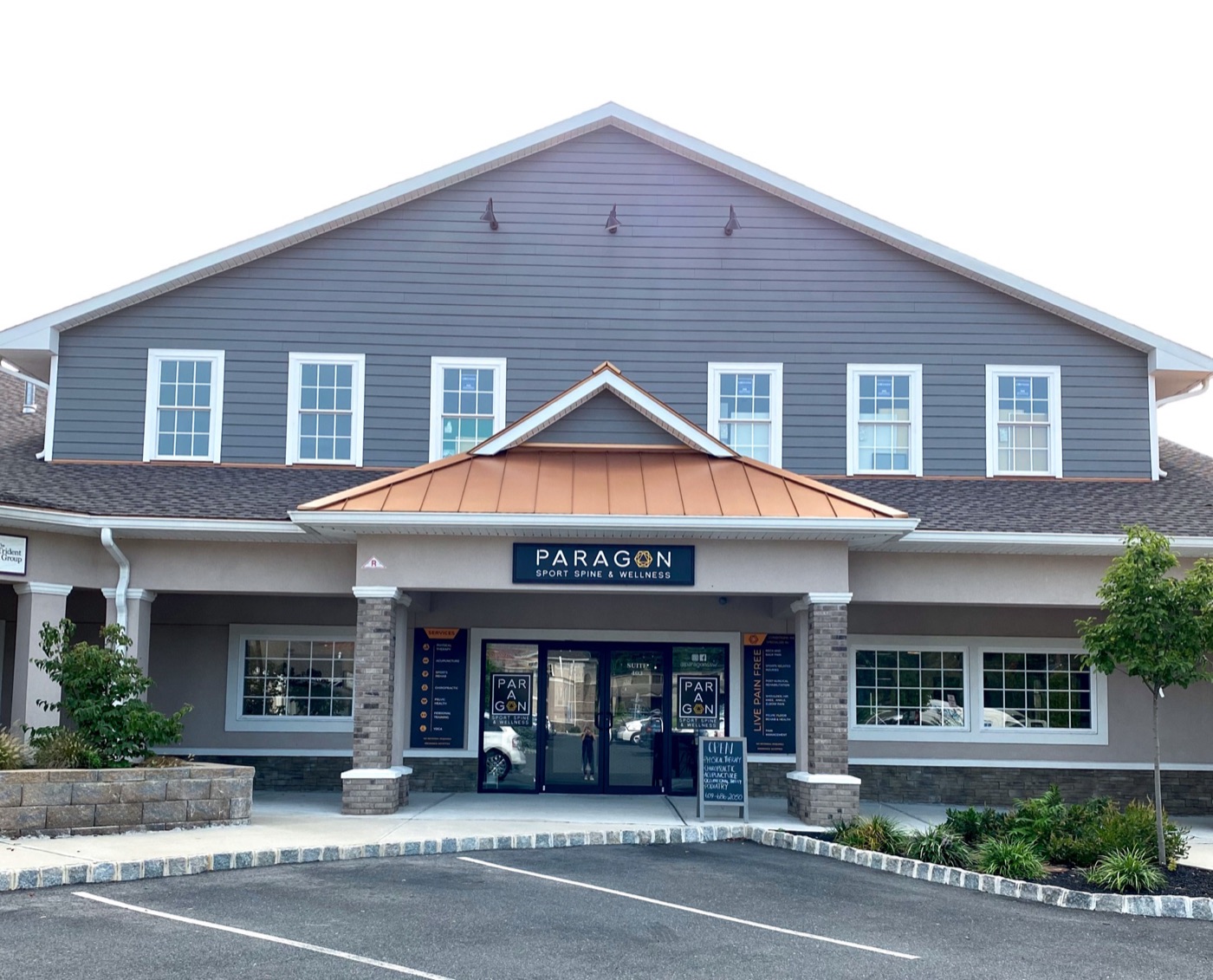
Paragon Sport Spine & Wellness building at Main Street Commons, Robbinsville NJ

Ready to feel like yourself again?

Request an appointment online or give us a call. We’ll take it from there. You’ll find us at Main Street Commons in Robbinsville, with easy parking and a wagging welcome from Milos at the front desk.