
New at Paragon: StemWaveLearn more
Clinician gently assessing a patient's neck

Nerve blocks & ablation

Quiet the specific nerves sending pain signals, from headaches to knee, leg and pelvic pain, with longer-lasting relief when you need it.

Every specialty, one roofOne shared plan for your careWe verify your insurance before your first visit

Every nerve treatment we offer

Tap a treatment to jump to it. Every option starts with a consult, where Dr. Skoblar reviews your history, exam and imaging to make sure it’s right for you, and your care is coordinated with your therapy team.

Occipital Nerve Block

A numbing injection at the base of the skull for migraines and headaches.

What is an occipital nerve block?

The occipital nerves run from the top of the neck across the back of the scalp. When irritated, they can trigger headaches and migraines felt at the base of the skull, behind the eyes or across the head.

An occipital nerve block delivers local anesthetic, often with a steroid, around these nerves to calm them, frequently providing quick relief and fewer headaches over time.

How it can help

  • Rapid headache relief
  • Can reduce migraine frequency
  • Quick in-office procedure
  • Helps identify the headache source

Occipital Nerve Block may help with

  • Migraines
  • Occipital neuralgia
  • Neck-related (cervicogenic) headaches
  • Cluster headaches

What to expect

  1. 1
    Procedure

    A small injection is placed at the base of the skull. It takes minutes.

  2. 2
    Recover

    Most people return to normal activities the same day.

Genicular Nerve Block

Interrupts pain signals from an arthritic or painful knee.

What is a genicular nerve block?

The genicular nerves carry pain signals from the knee joint. A genicular nerve block numbs these nerves with local anesthetic to relieve knee pain.

It’s often used to confirm these nerves are responsible before radiofrequency ablation, which can provide longer-lasting relief for knee arthritis or persistent pain after knee replacement.

How it can help

  • Relieves knee pain
  • Confirms candidacy for RFA
  • Minimally invasive
  • No injection into the joint itself

Genicular Nerve Block may help with

  • Knee osteoarthritis
  • Pain after knee replacement
  • Patients not ready for surgery

What to expect

  1. 1
    Procedure

    Using image guidance, anesthetic is placed around the genicular nerves.

  2. 2
    Track

    You record your relief to see whether RFA is the right next step.

Lumbar Sympathetic Block

Treats nerve-driven pain in the legs, such as CRPS.

What is a lumbar sympathetic block?

The lumbar sympathetic nerves, located along the lower spine, can contribute to burning pain, color and temperature changes, and swelling in the legs.

A lumbar sympathetic block delivers anesthetic to these nerves to interrupt abnormal pain signals. It’s used to both diagnose and treat conditions like complex regional pain syndrome (CRPS).

How it can help

  • Relieves burning nerve pain in the legs
  • Eases circulation-related symptoms
  • Helps diagnose sympathetic pain
  • Supports functional rehab

Lumbar Sympathetic Block may help with

  • Complex regional pain syndrome (CRPS)
  • Nerve pain in the legs
  • Circulation-related leg pain

What to expect

  1. 1
    Procedure

    Under image guidance, anesthetic is placed beside the lower spine.

  2. 2
    Recover

    You may notice warmth in the leg. Therapy follows to restore function.

Superior Hypogastric Plexus Block

Relief for chronic pelvic pain at its nerve source.

What is a hypogastric plexus block?

The superior hypogastric plexus is a bundle of nerves in front of the lower spine that carries pain signals from the pelvic organs.

Blocking these nerves with anesthetic can significantly reduce chronic pelvic pain, and it pairs well with pelvic floor therapy for a complete approach.

How it can help

  • Reduces chronic pelvic pain
  • Targets the nerve source
  • Complements pelvic floor therapy
  • Minimally invasive

Superior Hypogastric Plexus Block may help with

  • Chronic pelvic pain
  • Endometriosis-related pain
  • Pelvic pain after surgery

What to expect

  1. 1
    Procedure

    Using image guidance, anesthetic is delivered to the nerve plexus.

  2. 2
    Recover

    Most patients go home the same day and continue pelvic therapy.

Coccygeal (Ganglion Impar) Block

Targeted relief for stubborn tailbone pain.

What is a ganglion impar block?

Tailbone (coccyx) pain can make sitting miserable. It often follows a fall, childbirth or prolonged sitting, and the ganglion impar, a nerve bundle in front of the tailbone, carries much of that pain.

A ganglion impar block delivers anesthetic, often with a steroid, to this nerve bundle to relieve tailbone and surrounding pain.

How it can help

  • Relieves tailbone pain
  • Makes sitting comfortable again
  • Quick outpatient procedure
  • Complements pelvic therapy

Coccygeal (Ganglion Impar) Block may help with

  • Tailbone pain (coccydynia)
  • Tailbone pain after childbirth or a fall
  • Chronic perineal pain

What to expect

  1. 1
    Procedure

    Under image guidance, medication is placed near the tailbone.

  2. 2
    Recover

    Normal activities resume quickly. A cushion helps early on.

Radiofrequency Ablation (RFA)

Longer-lasting relief by quieting the nerves that carry pain.

What is radiofrequency ablation?

Radiofrequency ablation, also called rhizotomy, uses controlled heat to disable small sensory nerves that carry pain signals from a joint, without affecting muscle strength.

At Paragon, RFA is used for the neck and back (medial branch nerves), knees (genicular nerves), hips (femoral and obturator nerves) and headaches (occipital nerves). Relief often lasts many months, and the procedure can be repeated.

How it can help

  • Long-lasting pain relief
  • Treats spine, knee, hip and headache pain
  • Reduces reliance on medication
  • Repeatable if pain returns

Radiofrequency Ablation (RFA) may help with

  • Facet joint arthritis
  • Knee and hip arthritis
  • Chronic neck and back pain
  • Occipital headaches

What to expect

  1. 1
    Confirm

    A successful diagnostic nerve block confirms you’re a good candidate.

  2. 2
    Procedure

    Under image guidance, a probe gently heats the targeted nerves.

  3. 3
    Recover

    Soreness may last a week or two. Relief typically builds over several weeks.

Your Care Team

You’ll be in good hands

Dr. Matthew Skoblar, Interventional Pain Management

Dr. Matthew Skoblar

Interventional Pain Management

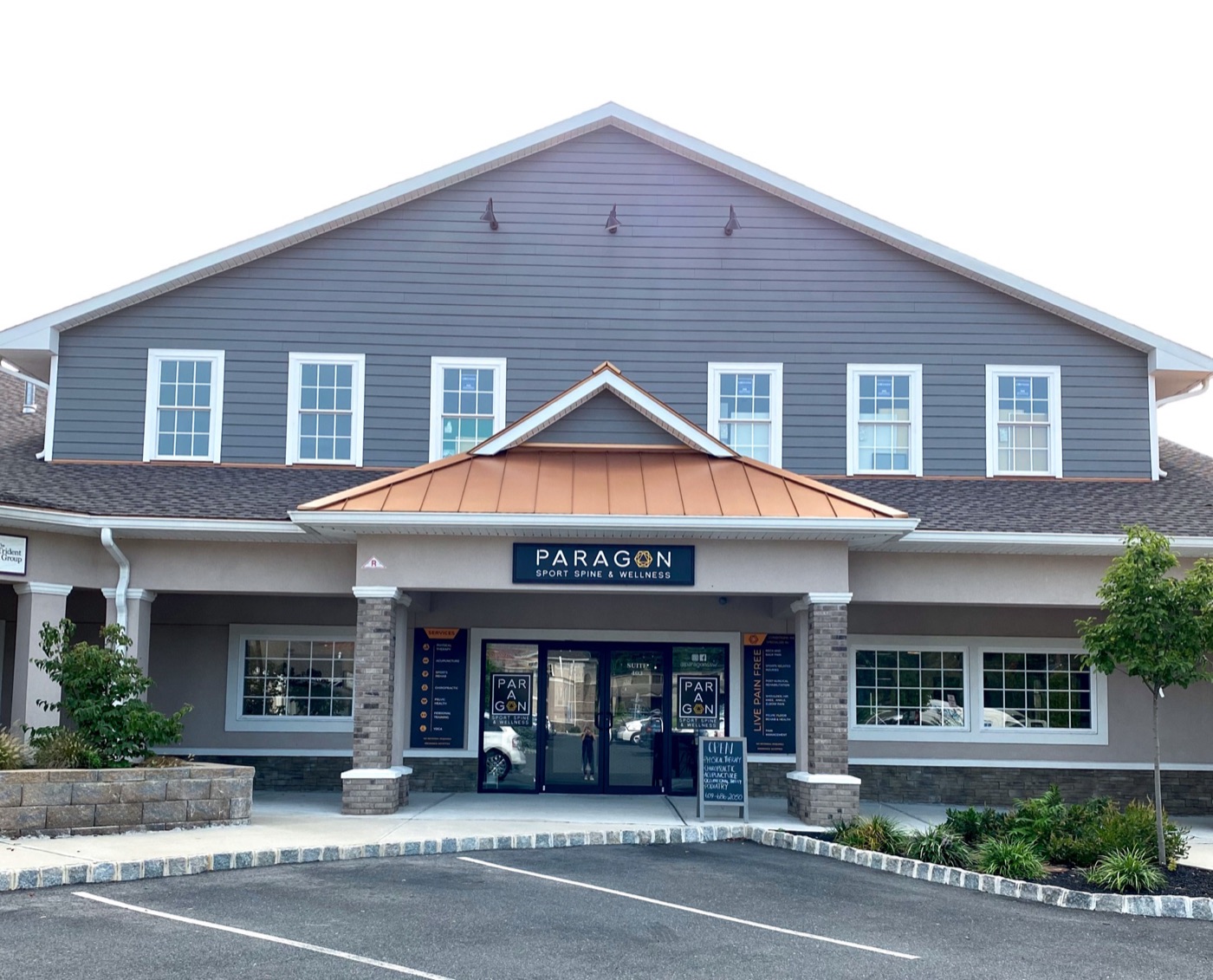
Paragon Sport Spine & Wellness building at Main Street Commons, Robbinsville NJ

Ready to feel like yourself again?

Request an appointment online or give us a call. We’ll take it from there. You’ll find us at Main Street Commons in Robbinsville, with easy parking and a wagging welcome from Milos at the front desk.